
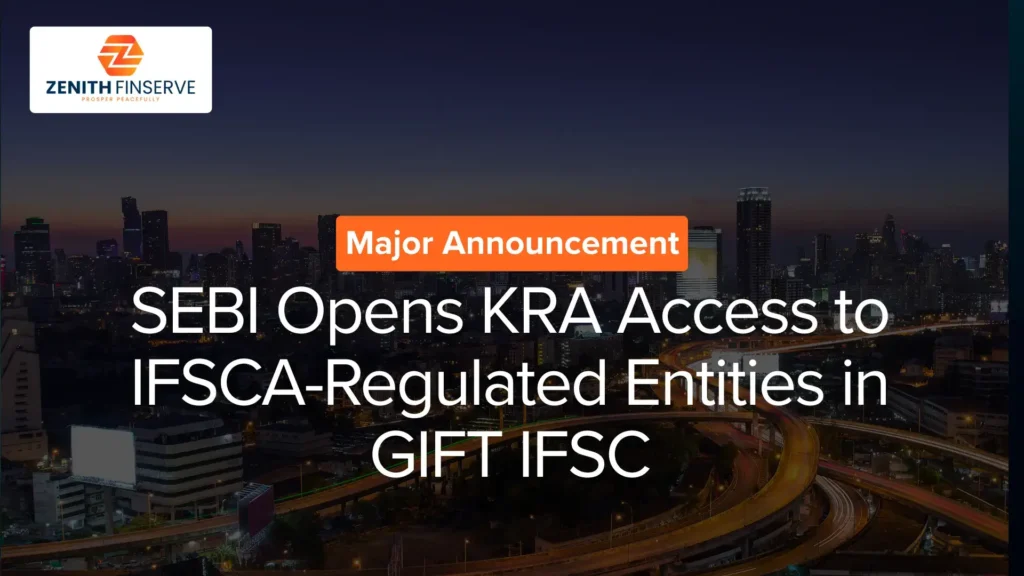
SEBI has allowed IFSCA-regulated entities in GIFT IFSC to access KYC information held by SEBI-registered KYC Registration Agencies. The move is aimed at improving interoperability and making KYC processes more seamless for clients using financial services in GIFT IFSC.
If you are using financial services in GIFT IFSC, your KYC process could become simpler as SEBI has enabled information sharing between its KYC Registration Agencies (KRAs) and entities regulated by the International Financial Services Centres Authority (IFSCA).
This allows IFSCA-regulated financial entities to access the KRA system for undertaking KYC of their clients.
What does this mean for you?
KYC information is maintained by SEBI-registered KRAs for clients in the securities market. IFSCA-regulated entities can now access this system for KYC purposes.
This creates a link between the KYC infrastructure used in India’s securities market and financial entities operating under the GIFT IFSC framework.
This could mean less duplication in the KYC process when you use financial services across these financial markets. However, the entity you are dealing with will still have to follow the applicable KYC requirements.
SEBI has also clarified that the provisions of its KRA regulations will apply to IFSCA-regulated entities accessing the KRA system.
Additional requirements for FPIs
The circular has a specific requirement for clients registered as Foreign Portfolio Investors (FPIs).
IFSCA-regulated entities accessing the KRA system must follow SEBI’s prescribed data-security guidelines for FPIs, Designated Depository Participants and Eligible Foreign Investors.
This is intended to ensure that access to KYC information is accompanied by appropriate data-security safeguards.
When does this change come into effect?
The change is effective from August 20, 2026.
For investors considering financial services through GIFT IFSC, this is another step towards making the financial ecosystem more integrated.
It does not, by itself, change the investment products available or their returns. The immediate impact is on how KYC information can be accessed and shared between regulated entities.
Source: SEBI Circular HO/38/15/(7)2026-MIRSD-POD dated August 20, 2026.